
Attendance, $80–$180
The Sydney-standard call-out fee. We name ours on the phone before you commit to anything, hold anyone who won’t to that standard.
When water is coming through the ceiling, the useful question is not "who opens at eight", it is "who answers now". We do. Around the clock across Leichhardt, a licensed plumber picks up, talks you through making it safe, and gets a crew moving.
Here is the test we give callers: is it spreading? Water spreading through a ceiling, waste rising in a floor drain, gas reaching more of the house: spreading problems are emergencies, because every hour of waiting is added to the repair bill. Static problems, a drip into a bucket, a slow drain with a second bathroom available, can usually sleep until daylight rates. Tell us what you see and we will sort it into the right column honestly.
The other half of the job happens before we arrive. Whoever answers your call talks you through the shut-off that stops the damage, the meter valve for water, the cylinder valve for a failing tank, evacuation and 131 909 for gas, so by the time the van reaches Leichhardt, Annandale, Lilyfield, Petersham or anywhere across the Inner West, the situation is stable and the repair can start instead of the triage.


The Little Italy cafe and restaurant strip pushes fats and food waste into drains that build up and block without regular jetting.
A café or kitchen with a backed-up floor waste has a different problem from a household. There is a health standard to meet, staff arriving in a few hours, and a grease line that has usually been narrowing for months before the night it finally closes over.
We clear and jet trade waste lines after hours specifically so premises open on time, and we will tell you honestly whether tonight buys you a week or a year. If the line is glazed hard with old fat, the answer is a scheduled jet and a service interval, not another call-out at emergency rates next month.
The genuine emergency in an older home is often not the size of the fault but the lack of an alternative. A single bathroom out of action with a family in the house is a call-out, whatever the textbook says about severity.
Leichhardt’s Victorian and Federation terraces run on early clay pipes that crack and shift, inviting roots and blockages after decades of use.
We treat it that way. If it is the only toilet, it goes to the front of the queue, and if we can talk you through getting it usable tonight so the visit can happen at daytime rates tomorrow, we will do that instead and say so on the phone.
Low-lying streets near the Hawthorne Canal drain slowly, so heavy rain overwhelms gullies and backs water up into yards.
If it is happening right now: stay out of moving water, lift what you can off the floor of the garage, and clear any grate you can reach safely from dry ground. Do not lift a surcharging pit lid, the water underneath is moving faster than it looks.
Once the rain stops, the pit that overflowed usually has a reason, and it is rarely the rain. Silt, roots or a collapsed section will do it, and the difference matters because one of those is a clean-out and the others are a repair.
Grease does not block a line suddenly. It narrows it over months, and the failure arrives on the night of the highest load, a full service, a function, a long weekend.
Leichhardt sits at the heart of Sydney’s Inner West (postcode 2040), bordering Annandale, Lilyfield, Petersham, Lewisham and Haberfield. Home to the city’s Little Italy along Norton Street, its terraces and busy cafe strips give our drain crews steady work.
That is why the useful question after a commercial blockage is not what went down the sink tonight, but when the trap was last pumped and the line last jetted. We will give you both dates from what the camera shows, and a realistic interval to keep to.
A drainage system laid a century ago was built for a household that used a fraction of the water yours does. Add a second bathroom, a dishwasher and a washing machine, and lines that coped for decades start showing where they are weakest.
That is not an argument for replacing everything. It is an argument for knowing which sections are actually tired, so the money goes into those rather than into the whole run on the assumption that old means finished.
A yard that floods in every serious downpour is a different problem from one that flooded once in a freak storm. The first is a blocked or undersized line and it will keep happening; the second is weather.
Telling them apart takes a camera on a dry day, not a guess in the rain. If it has happened twice, book the inspection between storms, clearing a surcharging pit at the height of it costs more and tells you less.
The Sydney-standard call-out fee. We name ours on the phone before you commit to anything, hold anyone who won’t to that standard.
Business hours runs roughly $120–$160; after-hours sits higher because a licensed plumber is out of bed for you.
Call-out plus early labour plus minor parts covers the bulk of real after-hours jobs: bursts, blockages, failed valves.
Under-slab leaks, gas line faults, anything opening walls in the small hours. The number is agreed with you first, always.
Contained, isolated, water off? We will tell you it can wait and book daylight rates. Honesty is cheaper than urgency.
The price is agreed before work starts, including at 2am. Figures here are indicative of the 2026 Sydney market rather than a quote from us, you get your own number as a fixed price before any work starts.
You describe it; we tell you what to isolate right now, and give you a real ETA, plus an honest "this can wait" when it genuinely can.
Crews run stocked for the common failures, pipe and fittings, valves, flexi hoses, drain machines: so the fix does not wait for a supplier to open.
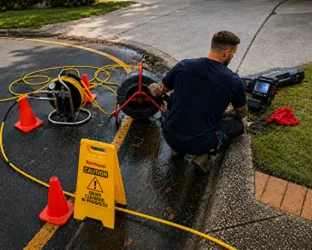
Damage gets stopped before anything else. Then you see a fixed price for the repair and decide with the number in front of you.

Nearly every emergency gets its permanent fix on the spot. Where a part truly has to wait, you are left watertight and working until it lands.
Describe it and let us make the call with you. Genuine can-wait jobs get booked at daylight rates, genuine emergencies get a crew now.
Phone is fastest at any hour. Form enquiries after dark ring through to the on-call plumber, not an inbox that opens at nine.

Leave your details and our local Leichhardt team will call you back fast.