
Reachable burst: $200–$500
Garden, garage or open wall access, cut out and repaired at daytime rates.
Water finds the ceiling fast and the cause slowly, the wet patch is almost never over the split. We shut it down, trace the failure to its source, and repair the pipe rather than bandaging the symptom. Around the clock across Leichhardt and the Inner West.
Pipes rarely burst without a biography. Leichhardt’s older homes run copper laid generations ago, thinning quietly from the inside until mains pressure finds a weak micron; galvanised steel rusting at every thread; and renovation-era junctions where old metal meets nineties plastic meets modern PEX, each connection a wager against time. High street pressure across parts of the Inner West settles those wagers early.
Then the water lies to you about the address. It runs the outside of the pipe, follows timber, and surfaces metres downhill of the failure: which is why opening the ceiling under the stain finds wet plaster and nothing to fix. We refuse to guess: the line is traced with listening gear, thermal imaging and section pressure testing, the failed piece is cut out, and the repair proves itself on a gauge before the plaster goes back on.


Old pipework often fails within weeks of building work, and it is rarely the builder's fault. Vibration, a wall opened up, or the water simply being turned off and back on is enough to dislodge scale that was holding a corroded section together.
Leichhardt’s Victorian and Federation terraces run on early clay pipes that crack and shift, inviting roots and blockages after decades of use.
If you are renovating an older home around Leichhardt, the cheap moment to replace accessible pipework is while the walls are already open. It costs a fraction of doing it later and it removes the section most likely to fail next.
A cracked earthenware line under the yard can lose water into the ground indefinitely without a single visible symptom. The soil takes it, the grass over it looks slightly better than the rest, and nothing backs up because the line still flows.
The damage is not the lost water, it is what saturated ground does to footings and to the bedding under the pipe itself. A line leaking into its own trench undermines its own support, which is how a crack becomes a sag and then a collapse.
Most heritage-era houses are a layered record of every plumber who has worked on them: original galvanised in the untouched parts, copper from a seventies bathroom, and modern pex from whatever was done last.
That matters because a burst tells you about one section, not the house. We will say which era failed and whether the rest of that era is still in service, which is the difference between a repair and an informed decision about the next five years.
Not every escape of water is a burst pressure pipe. A cracked or collapsed drain leaks too, slowly, without a pressure drop, and often for months before anything shows.
The distinction matters because the repairs are different jobs at different prices. A pressure leak shows on the meter with every tap closed; a drain fault does not, and it is found with a camera rather than a listening device.
Before anything else: the stop valve at your water meter, on the boundary, usually beside the garden tap. Turn it clockwise until it stops. Every burst in the house becomes a puddle the moment you do.
Go and find it now, while nothing is wrong, and check it actually turns. A valve seized with age is common and it is far better discovered on a dry afternoon than during the event it was meant for.
Most home policies cover the damage sudden escaping water does to floors, walls and contents, while treating the failed pipe itself as maintenance. So the ruined carpet is often claimable and the length of copper often is not.
Policies differ and it is worth reading yours before you need it. What helps every claim is the same: photographs before anything is moved, the time the failure was found and isolated, and a plumber's report stating what failed and why.
Sydney does not freeze pipes, so the causes are age, pressure, movement and workmanship. Corrosion thins a wall until it opens; high standing pressure fatigues fittings; ground movement pulls joints apart; and a connection that was never quite right eventually proves it.
Which one you have determines whether this is a one-off repair or the first of several. That is the question worth answering while the plumber is already there.
Garden, garage or open wall access, cut out and repaired at daytime rates.
Wall and ceiling repairs, including the tracing that keeps the access hole singular and small.
Locating gear plus concrete or excavation access: or a smarter reroute around the lot.
Roughly $180–$250/hr versus $120–$160 daytime, plus attendance. Meter off + morning booking is sometimes the clever play; we will say so.
Professional leak detection's first hour. Cheaper than the second exploratory hole, let alone the third.
Every repair ends the same way: holding mains pressure on a gauge, under a lifetime workmanship warranty. Figures here are indicative of the 2026 Sydney market rather than a quote from us, you get your own number as a fixed price before any work starts.
Meter valve clockwise: we walk you through it on the phone, and the flood stops before the van starts. On site we isolate just the injured line when the layout allows it.
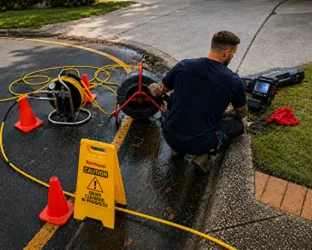
Acoustic listening, thermal imaging and section-by-section pressure testing find the actual split, which is rarely under the wet patch.

The damaged section is removed and replaced properly. If what we expose says the whole run is finished, you hear it straight, with prices for both roads.

Mains-pressure test before anything closes. The repair demonstrates itself; then, and only then, do surfaces go back.
The hard part is done, the water has stopped. Call, and we plan the repair with you before anything else gets wet.
Water off? Good: now let us get it back on. Fixed price before the repair starts, pressure-tested before we leave.

Leave your details and our local Leichhardt team will call you back fast.